Global Issues
Global health issues and solutions
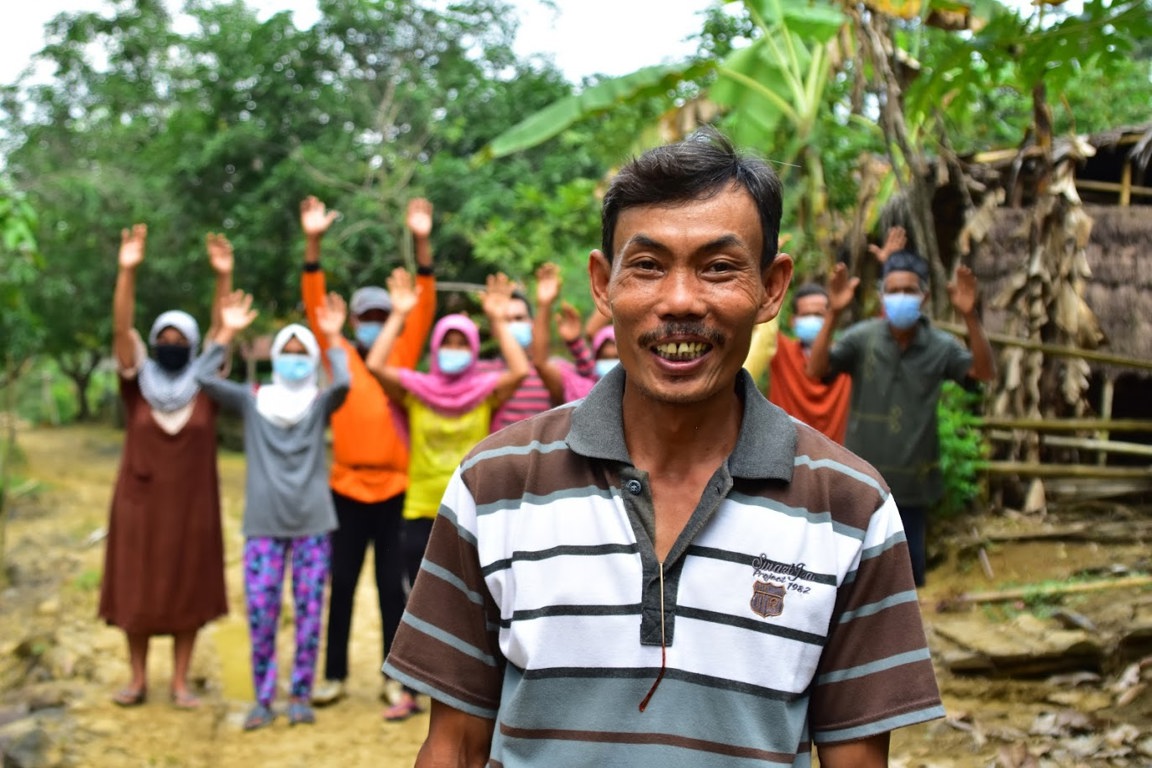
Arsad from Indonesia did not have a toilet or running water in his house until 2019 and had to walk a long distance to Open Defecation (OD) areas such as the forest or under trees, sometimes accompanying his wife at night, with the threat of snakes along the way. OD caused poor health, a dirty neighbourhood and family and community fights. Caritas Australia local partner Laz Harfa ran a Community Led Total Sanitation (CLTS) program is his community and through this he became a trusted community leader and hygiene advocate. Photo credit: Richard Wainwright/Caritas Australia.
4.2 billion
people do not have safely managed sanitation services.
3 billion
people lack basic handwashing facilities.
100 million
cases of COVID-19 have been confirmed globally.
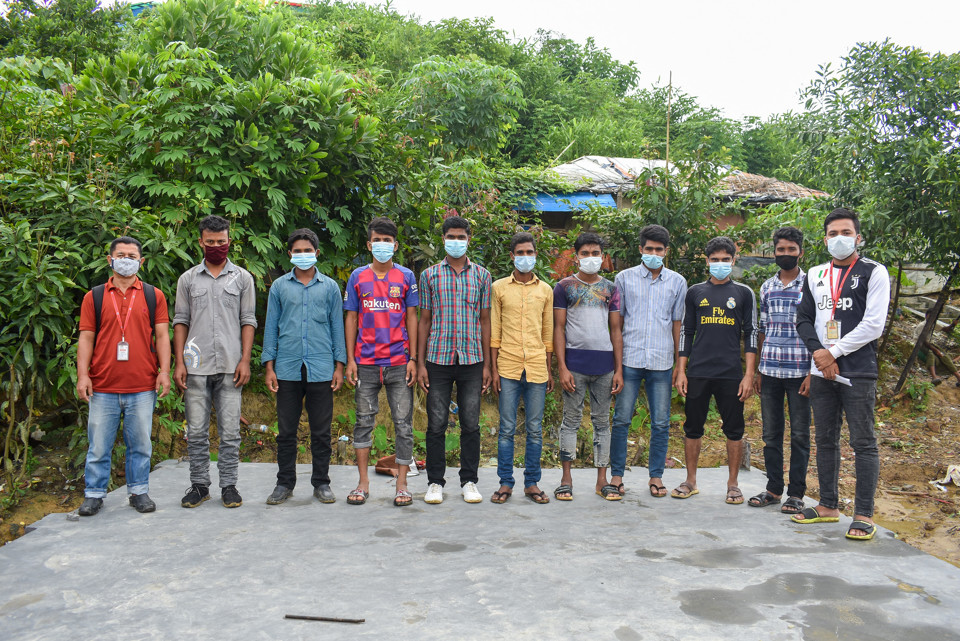
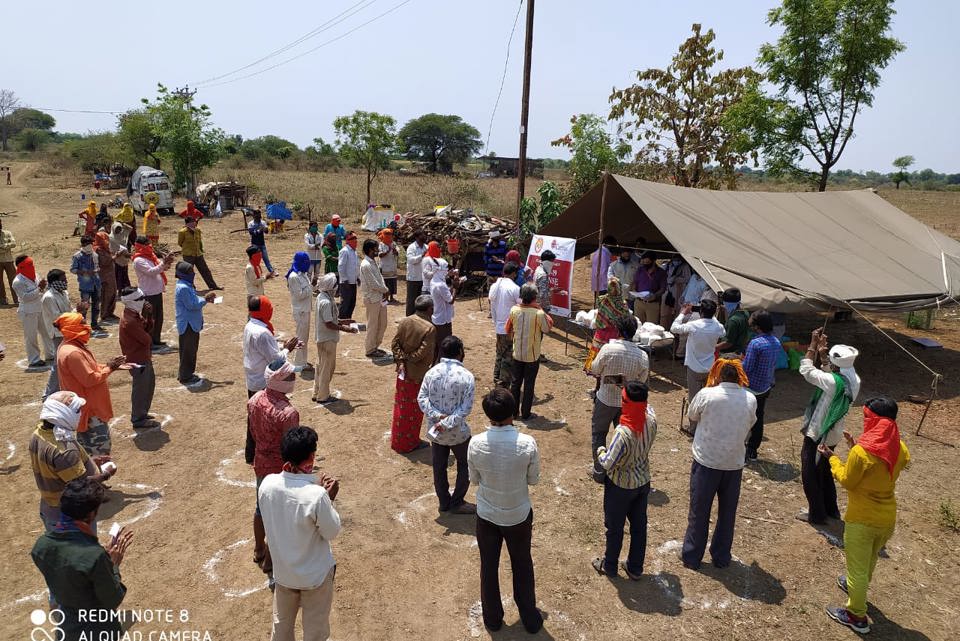
Caritas Bangladesh staff and Rohingya WASH volunteers in their Rohingya refugee camp in Cox’s Bazaar region of Bangladesh in August 2020. Photo credit: Inmanuel Chayan Biswas/Caritas Bangladesh.
Effects of poor health
Health and access to affordable health care have a direct affect on all aspects of a person’s life. In vulnerable, marginalised communities, where living conditions are already challenging, this can result in:
- Shorter life expectancies.
- Higher rates of infant mortality.
- Deaths from preventable or treatable diseases.
- Higher rates of disability.
- Lower educational attainment, interruptions to schooling and poorer educational outcomes.
- Loss of income and higher rates of unemployment.
Lack of food security
Malnutrition can be caused by a lack of food security or unsustainable food production.
Lack of Infrastructure
Lack of proper health care infrastructure or insufficient health care professionals.
Poor Sanitation
Poor sanitation and hygiene facilities and lack of awareness.
Environmental Change
Environmental change, natural disasters, and the absence of effective risk management systems.
What is WASH?
WASH is an acronym that stands for ‘water, sanitation, hygiene’. Universal, affordable and sustainable access to WASH is a key public health issue within international development.
"Access to WASH" includes safe water, adequate sanitation and hygiene education. Improving access to WASH services can improve health, life expectancy, student learning, gender equality and other important issues of international development. This can reduce illness and death, and also affect poverty reducton and socio-economic development.
Challenges include providing services to urban slums, improper management of water distribution systems, failures of WASH systems over time, providing equitable access to drinking water supply and gender issues.
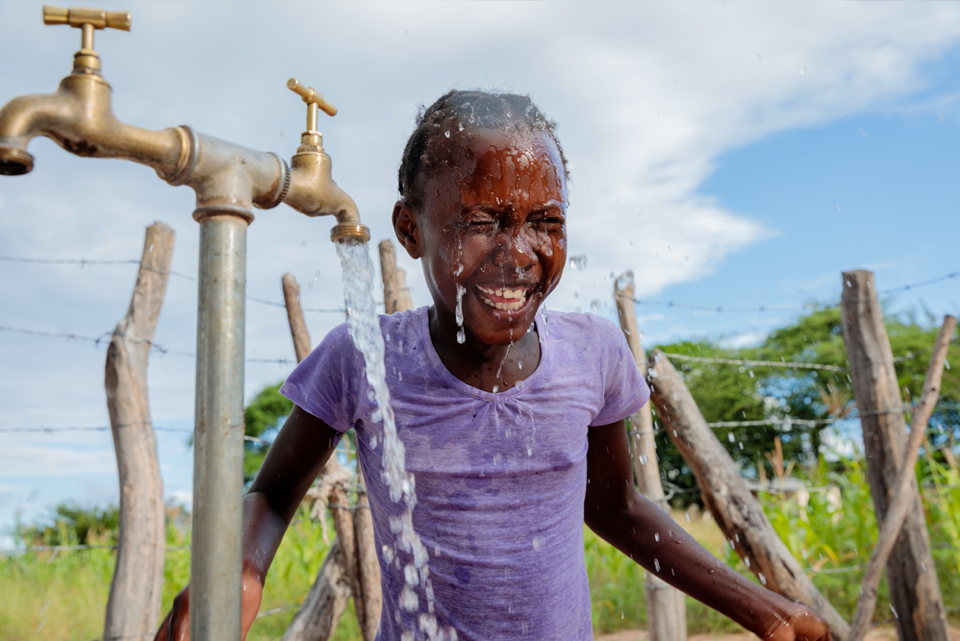
Thandolwayo (9) from Tanzania washes her face from the new water pipe, installed in her village with the support of Caritas Australia. Before the pipe was installed, Thandolwayo and other members of the community had to walk over 5km one way at least once a day down a steep and dangerous hill to collect dirty water from the Gweyi river. She would often get sick and miss school from illness and being tired from collecting water. Photo credit: Richard Wainwright/Caritas Australia.
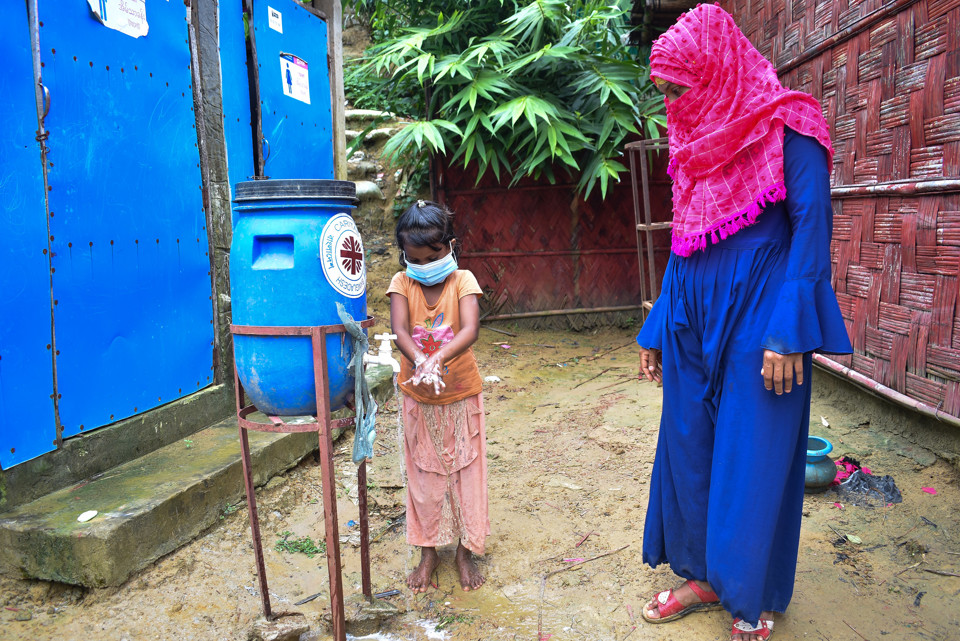
Halima (right) showing her children how to use a hand washing station in her Rohingya refugee camp in Cox’s Bazaar region of Bangladesh in August 2020. Photo credit: Inmanuel Chayan Biswas/Caritas Bangladesh.
What are we doing to improve health around the world?
Our international development programs recognise that good health is essential to a community’s socioeconomic progress and the wellbeing of its people. We work closely with communities in Africa, the Middle East, Asia, the Pacific Islands and Australia to drive positive change in the lives of their people.
We work with our local partners on the ground, through training, awareness-building and long-term programs to support local communities to thrive.
Our stories of change
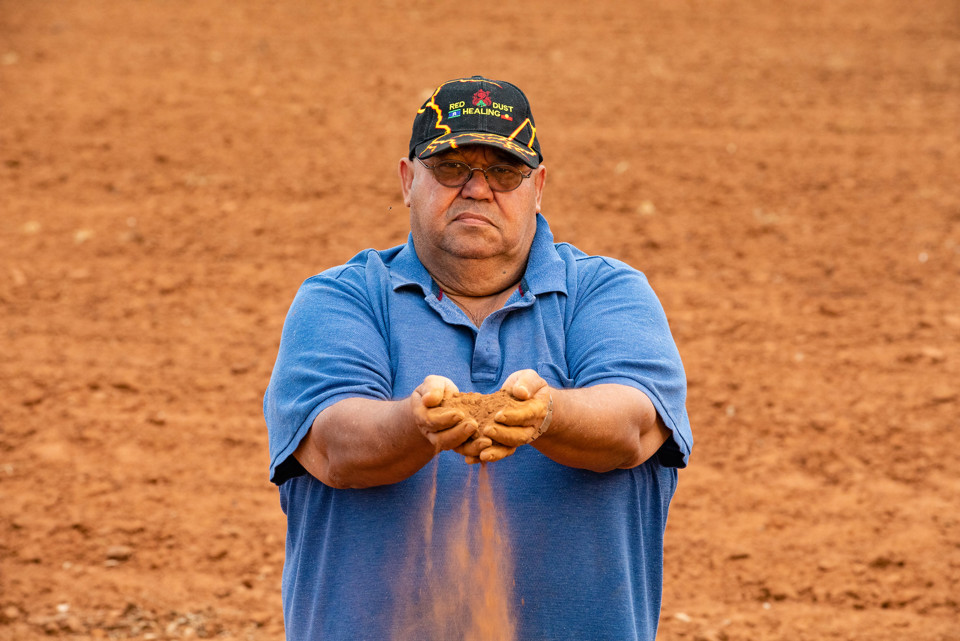
Tom holds red dust near his home town of Narromine, Australia, 2019. Tom is the founder of Red Dust Healing, a specific cultural healing program written from an Indigenous perspective. It aims to engage Indigenous men, women and families to recognise and confront problems, hurt and anger in their lives, stemming primarily from rejection and grief. Photo credit: Richard Wainwright/Caritas Australia.
In Australia, our work with organisational partner, Red Dust Healing supports First Nations Australians who have been disproportionately affected by the bushfires, drought, and COVID-19.
Through cultural healing programs, we are helping Indigenous Australians find deeper spiritual understanding in themselves and their community.
"When the dust settles on our lives, all you get to keep it and take with this is our dignity and integrity and the love and respect we shared with people." – Tom Powell
Caritas India was recently awarded for its work in response to the COVID-19 outbreak in India.
With more than 10,000 cases a day, the country was set to overtake the United States in caseload. They worked tirelessly with health authorities to help ensure that a majority of vulnerable communities were kept safe from infection.
"As a strong collective, Caritas India partners and congregational institutions contributed in breaking the chain of spreading COVID-19 by sharing knowledge, resources and reaching out to the weak and marginalised communities." – Fr. Paul Moonjely