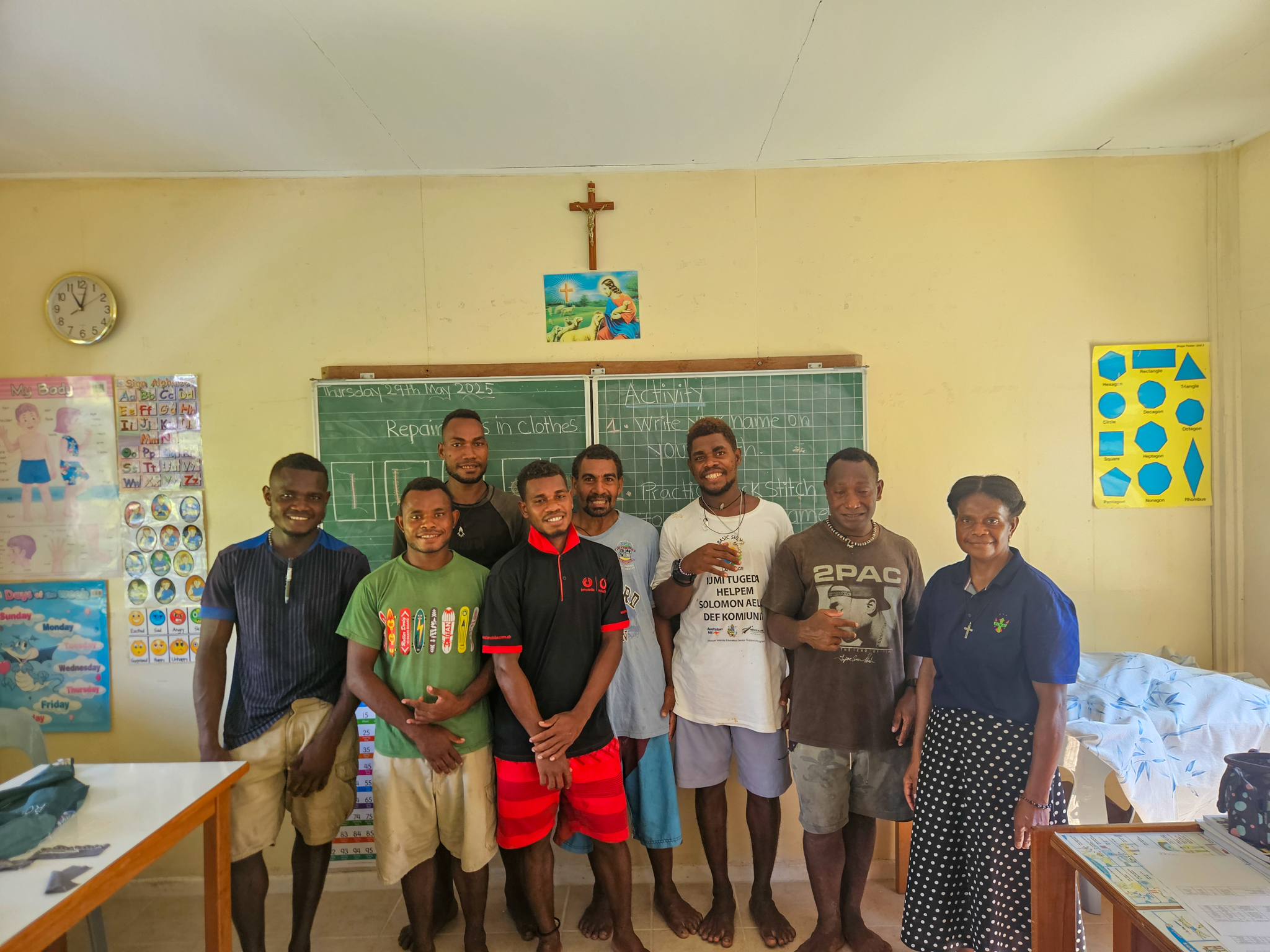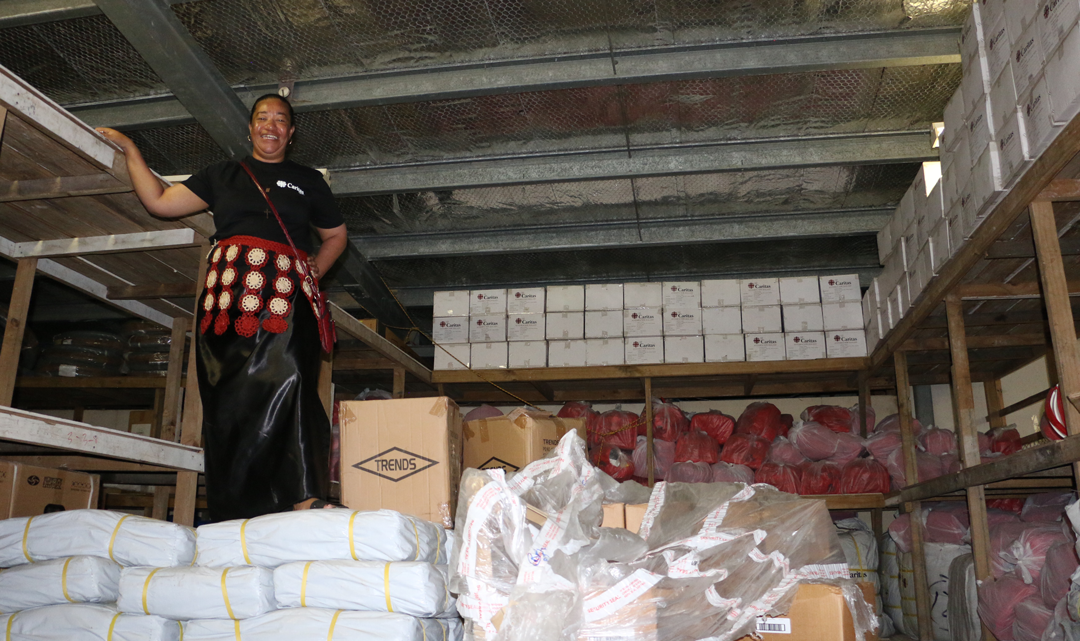
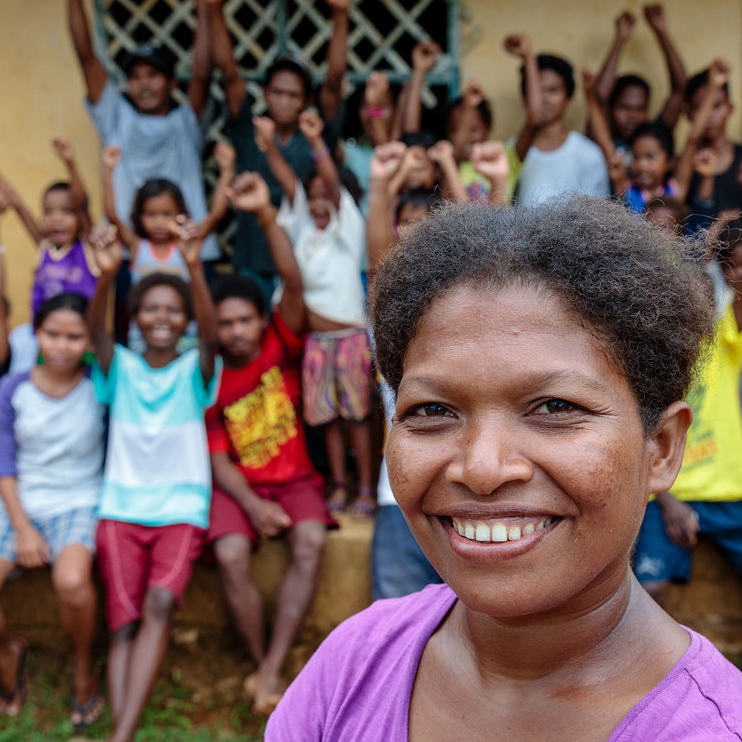


Students from the Solomon Islands receive their School Care Kits. Photo: Caritas Australia Solomon Islands
Students in the Solomon Islands have returned to school after a year of disruptions caused by COVID-19 outbreaks and lockdowns.
With the support of Caritas Australia Solomon Islands (CASI), schools across the Pacific island nation have been provided with School Care Kits and Face Mask Production Kits to facilitate a safe return for students.
Schools were also provided with Face Mask Production Kits containing sewing machines and cloth materials, so that students can produce their own face masks.
So far, 39 schools have received School Care Kits and Face Mask Production Kits, with additional requests coming from 15 schools across the provinces of Malatia and Guadalcanal, as well as the capital city of Honiaria.
With your support, CASI has so far helped provide COVID-19 kits and prevention training to more than 10,633 people.

Sr Maria Fe Rollo, principal of San Isidro RTC (Rural Training Centre) said the pandemic is having a significant impact on education across the country. During the school closures, many students returned to their villages. Since the schools re-opening, there has been a 75% decline in school attendance at her RTC, with many students staying behind in their villages.
“Our deaf school community at San Isidro Care Centre, like all other schools in the country, was closed for four months due to the COVID-19 community outbreak. This health threat hampered the learning program of students,” Sr Maria said.
“We received the necessary personal protective equipment for the safety of our staff and students to help make us ready for possible cases of COVID-19 in the school. It was also very helpful that a nurse demonstrated the step- by- step use and disposal of the personal protective equipment.
“It was also important that right information brochures and poster were given and also face mask, hand sanitiser, temperature gun, soap and spray to ensure day to day health and safety of everyone.”
As part of the COVID-19 response, CASI collaborated with the Ministry of Health and Medical Services, and the Ministry of Education and Human Resources Development to ensure that the schools receive accurate health advice and are complying with government safety protocols for re-opening. In some instances, the Ministry of Health staff travelled with CASI to remote rural areas to support the distributions.
“This program helps a lot in stopping the spread of COVID-19 in our schools, communities and homes,” said Alberta Veo Tangi, representative of the Ministry of Health and Medical Services.
“Thank you very much for the people of Australia who supported this program. Without the people of Australia this will not be achieved.”